RoutenEurope
Five Weeks Overland Through the Balkans
Alpine lakes to the Aegean by bus and train across seven countries.
Speichern
Der gepunktete Pfad ist schematisch (ungefähre Großkreisbögen zwischen den Stopps) und keine Transportroute.
Station für Station
Klicke auf einen Stopp (oder seine Markierung auf der Karte) für Kosten, Länderinformationen und Aktivitäten vor Ort.
1Ljubljana SIWalk the Ljubljanica riverbanks and ride the funicular up to the castle.3 Nächte
Wir haben kein vollständiges Reiseziel-Profil für Ljubljana oder das zugehörige Land noch nicht erfasst, daher gibt es für diesen Stopp keine Kosten-, Klima- oder Visumsdaten; die Routenhinweise beschreiben, was dieser Abschnitt beinhaltet. Nächstes profiliertes Reiseziel: Split (über 320 km).
bus · über 1.5 Stunden
2Lake Bled SICircle the lake on foot and take a pletna boat to the island church.2 Nächte
Wir haben kein vollständiges Reiseziel-Profil für Lake Bled oder das zugehörige Land noch nicht erfasst, daher gibt es für diesen Stopp keine Kosten-, Klima- oder Visumsdaten; die Routenhinweise beschreiben, was dieser Abschnitt beinhaltet. Nächstes profiliertes Reiseziel: Split (über 370 km).
bus to Ljubljana, then train · über 3.5 Stunden
3Zagreb CroatiaExplore the Upper Town and the Dolac market.2 Nächte
Wir haben kein vollständiges Reiseziel-Profil für Zagreb noch nicht, daher gibt es hier keine stopp-spezifischen Kosten- oder Klimadaten; die unten stehenden Fakten beziehen sich auf Länderebene. Nächstes profiliertes Reiseziel: Split (über 260 km).
Croatia: praktische Fakten
- Währung
- Euro (since 2023) (EUR) · 0.89 EUR/USD (Financial Modeling Prep (indicative mid), Nov 05, 2026)
- Sprache
- Croatian; English very widely spoken on the coast
- Stecker und Spannung
- C, F (230 V)
- Leitungswasser
- Safe to drink
- Notfall
- 112
- US-Reisehinweis
- Niveau 1
bus · über 2.5 Stunden
4Plitvice Lakes CroatiaWalk the lake boardwalks early, before the day-trip coaches arrive.1 Nacht
Wir haben kein vollständiges Reiseziel-Profil für Plitvice Lakes noch nicht, daher gibt es hier keine stopp-spezifischen Kosten- oder Klimadaten; die unten stehenden Fakten beziehen sich auf Länderebene. Nächstes profiliertes Reiseziel: Split (über 170 km).
Croatia: praktische Fakten
- Währung
- Euro (since 2023) (EUR) · 0.89 EUR/USD (Financial Modeling Prep (indicative mid), Nov 05, 2026)
- Sprache
- Croatian; English very widely spoken on the coast
- Stecker und Spannung
- C, F (230 V)
- Leitungswasser
- Safe to drink
- Notfall
- 112
- US-Reisehinweis
- Niveau 1
bus · über 4.5 Stunden
5Split CroatiaBase in Diocletian's Palace with an island day trip by ferry.4 Nächte
$672 mittel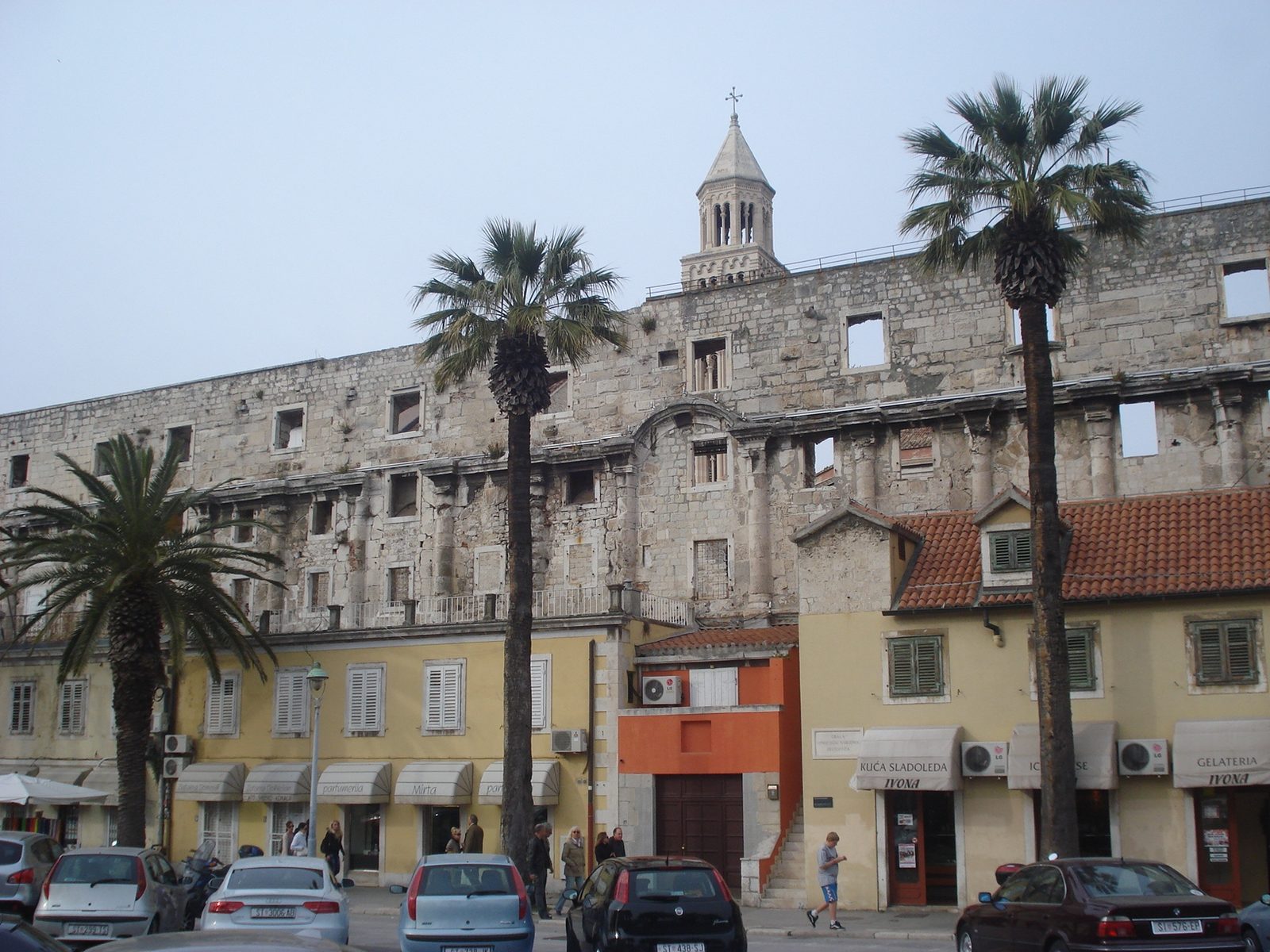 Photo: Silverije · CC BY-SA 3.0
A Roman palace turned living city, with the islands of the Adriatic at the end of the pier.
Split grew inside the retirement palace of the emperor Diocletian, and 1,700 years later the palace is still the centre: cafes in the peristyle, apartments in the walls, the cathedral in his mausoleum. Around it is a confident Dalmatian port city of beaches, the Marjan hill forest, a ferry harbour that serves Hvar…
- Tagesbudget
- $70–$332 pro Person, von Backpacker bis komfortabel, redaktionelle Schätzung, Oct 2026
- Dieser Stopp
- $672 4 Nächte zum täglichen Mittelklasse-Richtwert
- Beste Monate
- May, Jun, Sep
- Internet
- 100 Mbps typische Festleitung, redaktionell
Aktivitäten
- Diocletian's Palace The cellars, the cathedral bell tower, the peristyle at night.
- Marjan hill Pine forest, viewpoints and swimming coves on the city's own peninsula.
- Hvar, Brac and Vis Day trips are possible; stay a night and the islands change.
- Krka national park Waterfalls an hour away; Plitvice is 3 hours.
Croatia: praktische Fakten
- Währung
- Euro (since 2023) (EUR) · 0.89 EUR/USD (Financial Modeling Prep (indicative mid), Nov 05, 2026)
- Sprache
- Croatian; English very widely spoken on the coast
- Stecker und Spannung
- C, F (230 V)
- Leitungswasser
- Safe to drink
- Notfall
- 112
- US-Reisehinweis
- Niveau 1
Vollständiger Reiseführer →Croatia Länderführer →Visabestimmungen →
coastal bus · über 4.5 Stunden
6Dubrovnik CroatiaWalk the city walls and take the cable car up Mount Srd.3 Nächte
Wir haben kein vollständiges Reiseziel-Profil für Dubrovnik noch nicht, daher gibt es hier keine stopp-spezifischen Kosten- oder Klimadaten; die unten stehenden Fakten beziehen sich auf Länderebene. Nächstes profiliertes Reiseziel: Split (über 160 km).
Croatia: praktische Fakten
- Währung
- Euro (since 2023) (EUR) · 0.89 EUR/USD (Financial Modeling Prep (indicative mid), Nov 05, 2026)
- Sprache
- Croatian; English very widely spoken on the coast
- Stecker und Spannung
- C, F (230 V)
- Leitungswasser
- Safe to drink
- Notfall
- 112
- US-Reisehinweis
- Niveau 1
bus · über 3.5 Stunden
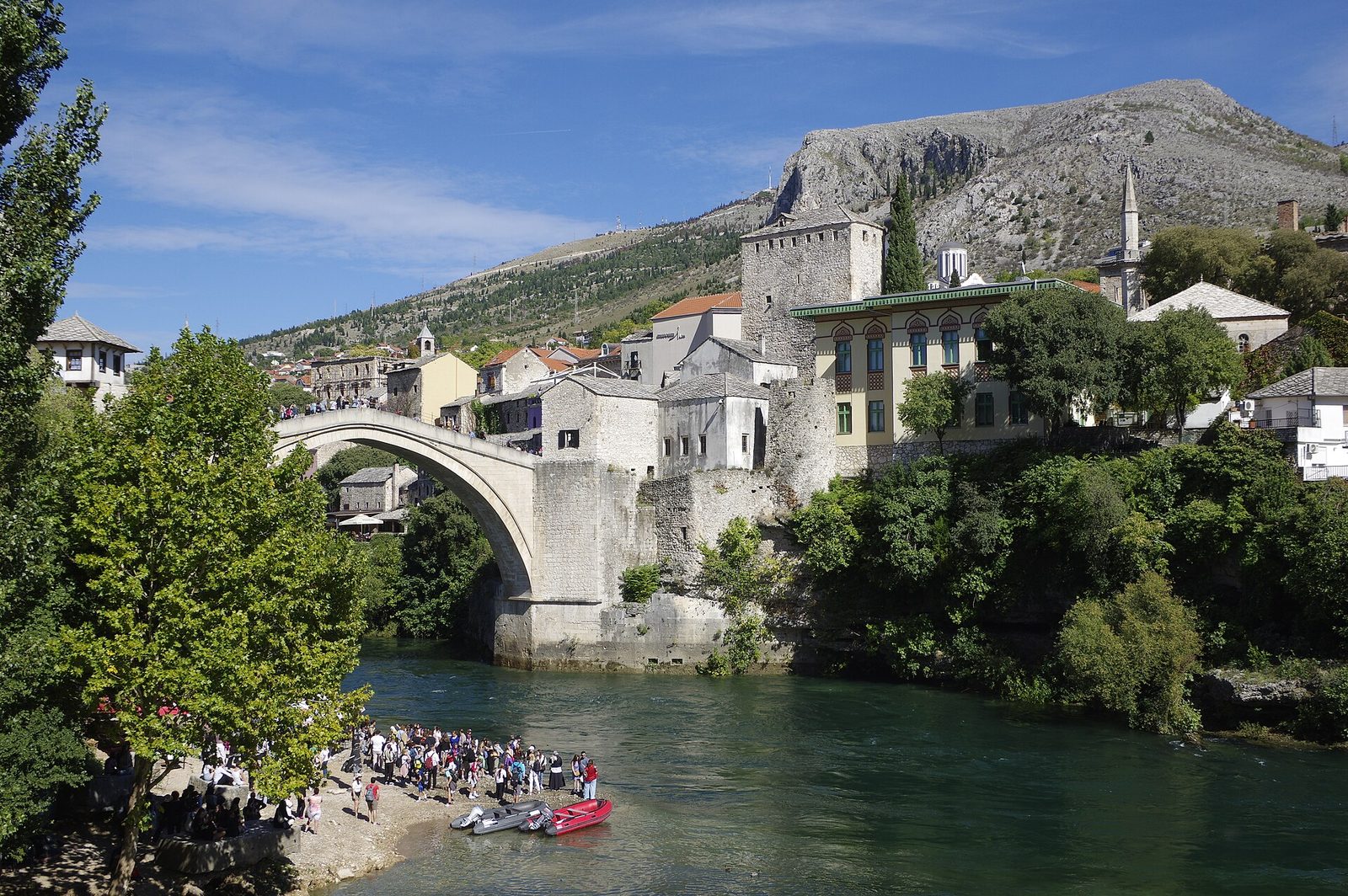
7Mostar BASee the Old Bridge and the Ottoman-era bazaar quarter.2 Nächte
Wir haben kein vollständiges Reiseziel-Profil für Mostar oder das zugehörige Land noch nicht erfasst, daher gibt es für diesen Stopp keine Kosten-, Klima- oder Visumsdaten; die Routenhinweise beschreiben, was dieser Abschnitt beinhaltet. Nächstes profiliertes Reiseziel: Split (über 110 km).
train · über 2.5 Stunden
8Sarajevo BAWander Bascarsija and visit the War Childhood Museum.3 Nächte
Wir haben kein vollständiges Reiseziel-Profil für Sarajevo oder das zugehörige Land noch nicht erfasst, daher gibt es für diesen Stopp keine Kosten-, Klima- oder Visumsdaten; die Routenhinweise beschreiben, was dieser Abschnitt beinhaltet. Nächstes profiliertes Reiseziel: Split (über 160 km).
bus · über 7.0 Stunden
9Kotor MEClimb the fortress steps above the old town for views over the bay.3 Nächte
Wir haben kein vollständiges Reiseziel-Profil für Kotor oder das zugehörige Land noch nicht erfasst, daher gibt es für diesen Stopp keine Kosten-, Klima- oder Visumsdaten; die Routenhinweise beschreiben, was dieser Abschnitt beinhaltet. Nächstes profiliertes Reiseziel: Tirana (über 150 km).
bus · über 6.0 Stunden
10Tirana AlbaniaVisit Bunk'Art and the Blloku cafe district.2 Nächte
$190 mittel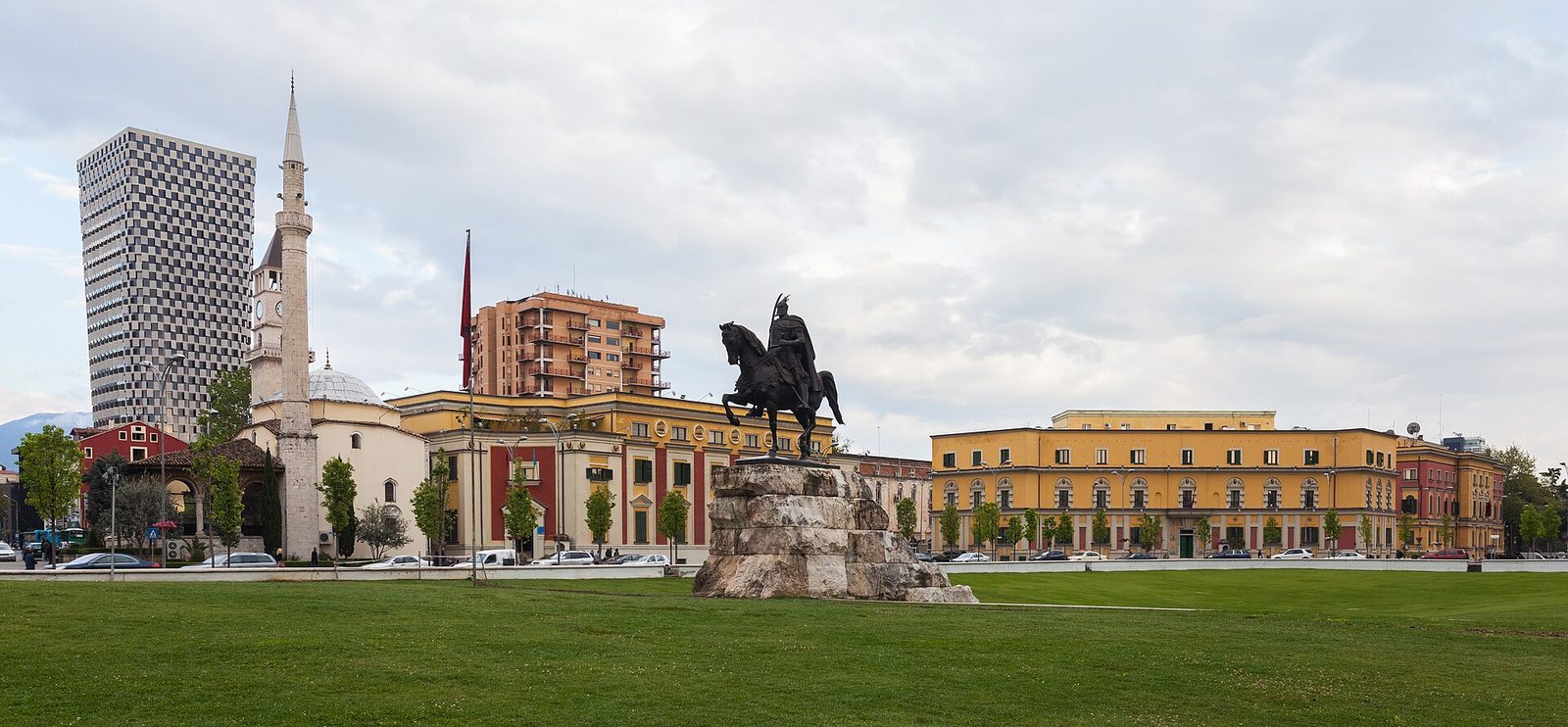 Photo: Diego Delso · CC BY-SA 3.0
The Balkans' most colourful capital, a year-long welcome for Americans, and a coast and mountains no one has priced in yet.
Tirana was a closed, grey capital until 1991 and has spent three decades painting itself: pastel apartment blocks, a cafe culture that rivals Italy's, a boulevard of new architecture, a cable car to a mountain, and the Blloku district where the Communist elite once lived now full of bars and coworking spaces. It is…
- Tagesbudget
- $41–$189 pro Person, von Backpacker bis komfortabel, redaktionelle Schätzung, Oct 2026
- Dieser Stopp
- $190 2 Nächte zum täglichen Mittelklasse-Richtwert
- Beste Monate
- Apr, May, Jun, Sep, Oct
- Internet
- 80 Mbps typische Festleitung, redaktionell
Aktivitäten
- Bunk'Art 1 and 2 Communist-era bunkers turned into museums of the dictatorship.
- Skanderbeg Square and the National History Museum The mosaic facade and the centre's new face.
- Blloku Hoxha's villa, the cafes, the bars.
- Dajti Express cable car Up the mountain for views and hiking.
Albania: praktische Fakten
- Währung
- Albanian lek (ALL) · 80.66 ALL/USD (Financial Modeling Prep (indicative mid), Nov 05, 2026)
- Sprache
- Albanian; Italian and English widely understood
- Stecker und Spannung
- C, F (230 V)
- Leitungswasser
- Generally treated in Tirana; most visitors drink bottled
- Notfall
- 112 (129 police, 127 ambulance)
- US-Reisehinweis
- Niveau 2
Vollständiger Reiseführer →Albania Länderführer →Visabestimmungen →
bus · über 4.0 Stunden
11Ohrid MKWalk the lakeshore to the Church of St John at Kaneo.3 Nächte
Wir haben kein vollständiges Reiseziel-Profil für Ohrid oder das zugehörige Land noch nicht erfasst, daher gibt es für diesen Stopp keine Kosten-, Klima- oder Visumsdaten; die Routenhinweise beschreiben, was dieser Abschnitt beinhaltet. Nächstes profiliertes Reiseziel: Tirana (über 90 km).
bus via Skopje · über 8.0 Stunden
12Thessaloniki GreeceStroll the waterfront to the White Tower and eat in the Ladadika district.2 Nächte
Wir haben kein vollständiges Reiseziel-Profil für Thessaloniki noch nicht, daher gibt es hier keine stopp-spezifischen Kosten- oder Klimadaten; die unten stehenden Fakten beziehen sich auf Länderebene. Nächstes profiliertes Reiseziel: Tirana (über 270 km).
Greece: praktische Fakten
- Währung
- Euro (EUR) · 0.89 EUR/USD (Financial Modeling Prep (indicative mid), Nov 05, 2026)
- Sprache
- Greek; English widely spoken
- Stecker und Spannung
- C, F (230 V)
- Leitungswasser
- Safe in Athens and most of the mainland; bottled on many islands
- Notfall
- 112
- US-Reisehinweis
- Niveau 1
train or bus · über 5.0 Stunden
13Athens GreeceEnd at the Acropolis and the Acropolis Museum.3 Nächte
$438 mittel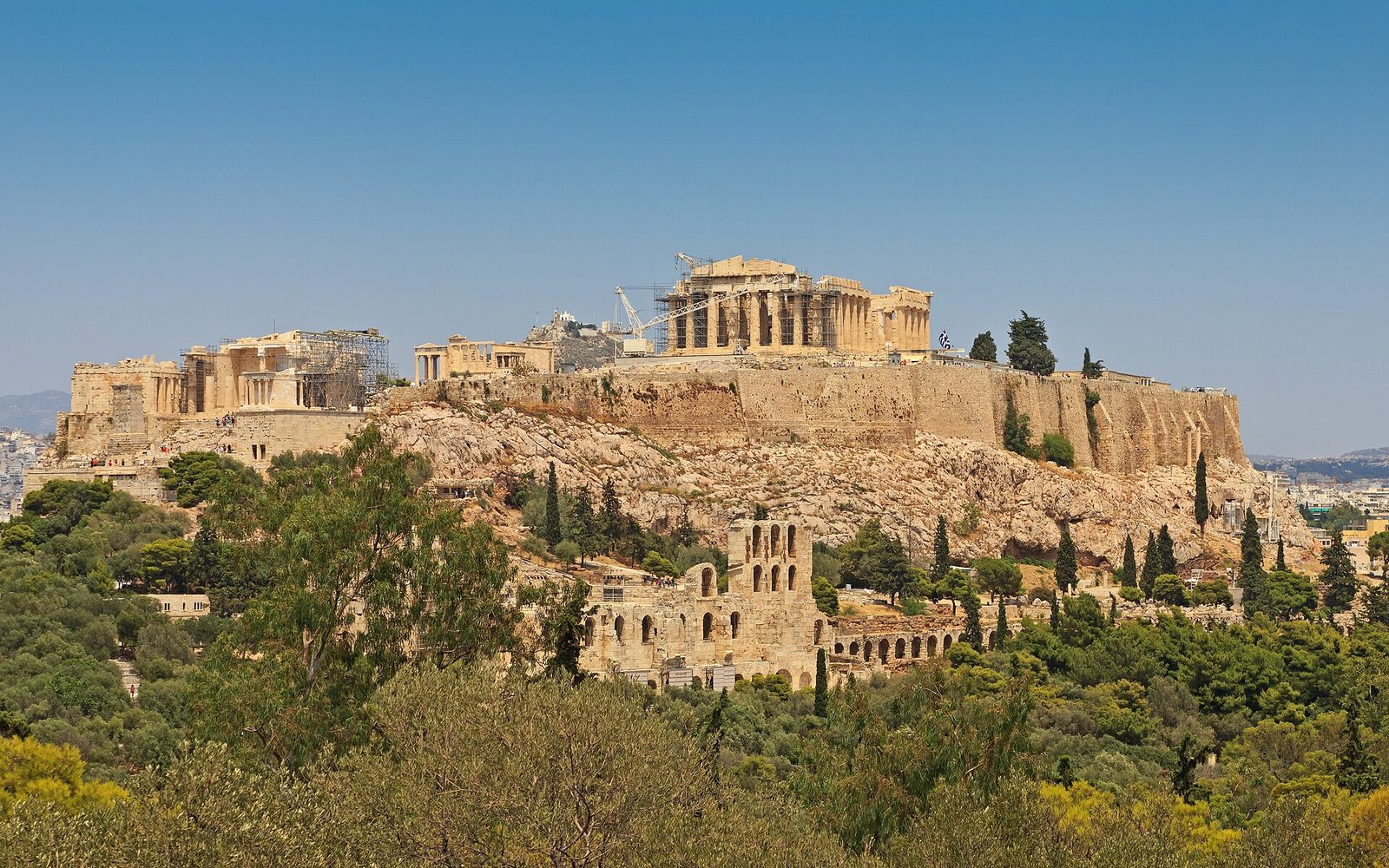 Photo: A.Savin · CC BY-SA 3.0
The Acropolis above, a city of neighbourhood tavernas and rooftops below, and the islands beyond.
Athens was a city people flew through on the way to the islands; now it is a city people stay in. The reasons: low rents by European capital standards, a cafe and nightlife culture that spills onto the street, Koukaki and Pangrati's neighbourhood life a walk from the Acropolis, the Riviera beaches on the tram line…
- Tagesbudget
- $64–$292 pro Person, von Backpacker bis komfortabel, redaktionelle Schätzung, Oct 2026
- Dieser Stopp
- $438 3 Nächte zum täglichen Mittelklasse-Richtwert
- Beste Monate
- Apr, May, Jun, Sep, Oct
- Internet
- 100 Mbps typische Festleitung, redaktionell
Aktivitäten
- The Acropolis and its museum Timed tickets; 8 a.m. or the last two hours; the museum at dusk.
- Ancient Agora and Kerameikos Quieter ruins where the city actually lived.
- Lycabettus and Filopappou hills Sunset over the whole basin.
- Koukaki and Pangrati Cafes, bakeries and the city's best neighbourhood tavernas.
Greece: praktische Fakten
- Währung
- Euro (EUR) · 0.89 EUR/USD (Financial Modeling Prep (indicative mid), Nov 05, 2026)
- Sprache
- Greek; English widely spoken
- Stecker und Spannung
- C, F (230 V)
- Leitungswasser
- Safe in Athens and most of the mainland; bottled on many islands
- Notfall
- 112
- US-Reisehinweis
- Niveau 1
Vollständiger Reiseführer →Greece Länderführer →Visabestimmungen →
The Alps to the Adriatic
The route opens in Ljubljana, a compact riverside capital, with a short hop to Lake Bled and its island church. Zagreb follows by train, then Plitvice Lakes National Park, where boardwalks run over a chain of terraced lakes and waterfalls. From there buses descend to Split, built around the Roman palace of Diocletian, and continue down the coast to the walled city of Dubrovnik. This first stretch is the busiest and most expensive part of the trip, especially in high summer.
Bosnia, Montenegro and Albania
Inland, Mostar is known for the rebuilt Stari Most bridge over the Neretva, and the train north to Sarajevo is one of the region's most scenic short rail journeys. Sarajevo mixes Ottoman, Austro-Hungarian and Yugoslav layers, and its museums cover the 1990s siege in detail. A long bus ride through the mountains reaches the Bay of Kotor, a fjord-like inlet with a fortified old town. Tirana, the Albanian capital, has grown into a lively, low-cost city with a strong cafe culture and museums in former Cold War bunkers.
Lake Ohrid to Athens
Ohrid sits on one of Europe's oldest lakes, with Byzantine churches above the shoreline and a UNESCO listing shared between North Macedonia and Albania. Crossing into Greece, Thessaloniki offers a waterfront promenade, Roman and Byzantine monuments and a well-regarded food scene. The final leg runs south to Athens and the Acropolis. Border crossings are routine but add time, so the plan keeps two buffer days and avoids tight connections on international legs.
Praktische Hinweise
Visas: Slovenia, Croatia and Greece are in the Schengen Area, while Bosnia and Herzegovina, Montenegro, Albania and North Macedonia are not and apply their own entry rules. Most Western passports currently enter all seven without a pre-arranged visa for short stays, but the EU Entry/Exit System registers non-EU travellers at Schengen external borders, and the ETIAS pre-travel authorisation is scheduled to follow; check the official EU and national sources before travel. Transport: buses do most of the work; regional trains run Ljubljana to Zagreb and Mostar to Sarajevo. Some cross-border buses run only once or twice a day, so timetables are worth confirming locally. Weather: late spring and early autumn are warm without the July and August crowds on the Croatian coast; inland Sarajevo and Ohrid are cooler. Budget: the mid figure assumes private rooms or guesthouses, local transport, park entry fees and a few paid tours, with Croatia costing noticeably more per day than Albania or North Macedonia. Safety: the region is generally considered safe for travellers; in rural Bosnia and Herzegovina, marked paths are the norm because of residual landmine risk. Check current official travel advisories.